
Elizabethtown Previous Residents Sources
Previous residents appear in sources that cover different spans of Elizabethtown history. The Hardin County Clerk's land index is the firmest path for ownership, while directories and census records add household evidence. Plats can keep a search on the right lot when a street number changes. The table separates proven coverage from collections whose full local run has not been posted online.
| Source | Years It Covers | Where Held | What It Shows |
|---|---|---|---|
| Clerk online deeds | May 1, 1938 to present | Hardin County Clerk eSearch | Parties, book/page, image, and legal description |
| Clerk archival deeds | 1793 to 1938 | Clerk Archive and Deed Room | Earlier owners in books A-Z and 1-99 |
| Elizabethtown city directory | 1932-1933 confirmed | Hardin County Historical Society | Name, address, and occupation leads |
| HeritageQuest census | 1790-1930 collection stated | Hardin County Public Library | Households and census geography |
| City permits | Current portal; historic span unposted | SmartGov or city records request | Projects, inspections, and construction dates |
For a recent property, begin with the PVA parcel record and the Clerk's land eSearch. For work before the online cutoff, take the last known book and page to the Clerk archive. When the question concerns occupants rather than title holders, consult the confirmed directory reprint and library census access. No full public inventory of local reverse directories was found, so ask collection staff before assuming a missing year never existed.
Elizabethtown Previous Residents Before 1938
The online deed index does not reach all the way through Hardin County's record history. The Clerk's Archive Search identifies deed books A through Z and 1 through 99 for the years before May 1938. Those books use alphabetic indexes and book/page references. A street address may not appear at all, so carry the legal description, lot, subdivision, and every cited prior deed from the newest instrument.
Kentucky Department for Libraries and Archives requests, FamilySearch, and microfilm may supplement the courthouse trail. KDLA reports a four-to-six-week research window for its request service, so it works best when the book, record type, names, and date range are already narrow. An absent web hit is not proof that a deed is gone.
Note: Confirm the current certified-through date in eSearch before treating the newest transfer as complete. Record that access date beside the book and page in the research log.
Elizabethtown Past Residents on Plats
The Clerk archive confirms Elizabethtown plats from 1847 and 1868. These maps can connect a present parcel to an older lot, block, road, creek, railroad line, or adjoining owner. That is crucial because no official local street-renumbering or address-conversion list was found. Never force a modern number onto an old deed solely because the street name looks familiar.
Compare the plat's lot geometry with the deed's legal description, then use current city and county GIS only as a visual cross-check. Subdivision, combination, or road work may have changed the tract. A previous-residents search is strongest when the same lot can be followed through each change instead of relying on the street label alone.
Trace Elizabethtown Past Residents
A backward deed chain begins with today's parcel, not with a guess about a former name. The Hardin County PVA property search supplies the current owner label, map ID, legal description, subdivision or lot, and often the current deed reference. The Clerk index is keyed by names, book/page, map ID, and other record fields, not by a street-address box.
- Copy the current owner, map ID, legal description, lot, subdivision, and deed book/page from the parcel record.
- Open that purchase deed by book/page or current owner. Note the seller, instrument date, tract wording, prior deed references, and any trust or estate role.
- Search the seller as a grantee in the earlier period. Match the tract by legal description, not by name alone.
- Repeat the link through deeds, plats, easements, restrictions, releases, and mergers until the web index ends.
- Continue in archival deed books and their alphabetic indexes, preserving each citation as you go.
- Grantor and grantee
- The grantor transfers an interest; the grantee receives it.
- Chain of title
- The linked series of recorded transfers for the same tract.
- Legal description
- The deed's lot, block, bounds, or tract language, which is more stable than a street number.
Read the deed image, not just the result row. The image can show a spouse, trustee, executor, commissioner, easement, restriction, or prior instrument that changes the next search. A title chain tracks ownership. It does not by itself prove who slept at the address.
Pair Elizabethtown Previous Residents Records
The Hardin County Historical Society lists a reprint of the 1932-1933 Elizabethtown city directory. It sits beside an important local event: the History Museum reports that the courthouse burned in December 1932, yet all records were saved. The directory gives a separate, dated cross-check for names and addresses from the same period. This survival claim should not be stretched to every kind of record.
- Find the address or surname in the closest available directory year and copy the entry exactly.
- Check the matching released census schedule through the library's HeritageQuest access, allowing for ward and boundary changes.
- Compare household names with deed ownership, then note any renter or relative who does not appear in title records.
- Use newspapers, probate, and the next deed to follow a departure, death, estate transfer, or address change.
The local collections themselves, including how entries are read, belong on the Elizabethtown city directory page. For an address trail, use only the volume and census years that bracket the household in question.
Elizabethtown Past Residents Research Desks
No official local house-history guide was located. Help is spread across several desks. Hardin County Public Library research connects readers with its catalog and HeritageQuest. The Historical Society holds local publications. The History Museum supplies local newspaper and courthouse context. The Ancestral Trails Historical Society offers a volunteer-run research library and research help.
The available images illustrate two of those offline paths. The Historical Society publication list confirms the directory reprint used for a tightly dated household check.
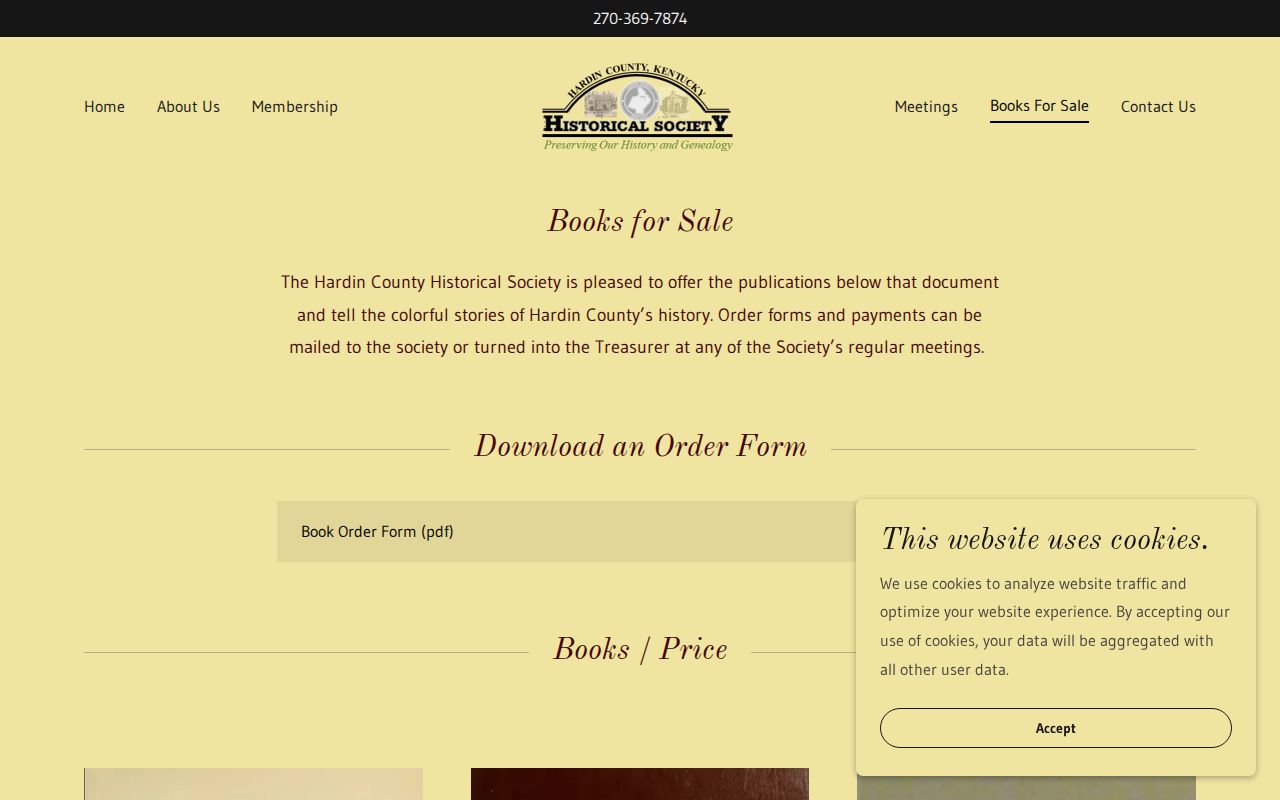
That listing turns a vague directory lead into a named local volume and a source to contact.
The Ancestral Trails Historical Society library describes family histories, county records, books, periodicals, and volunteer research support.
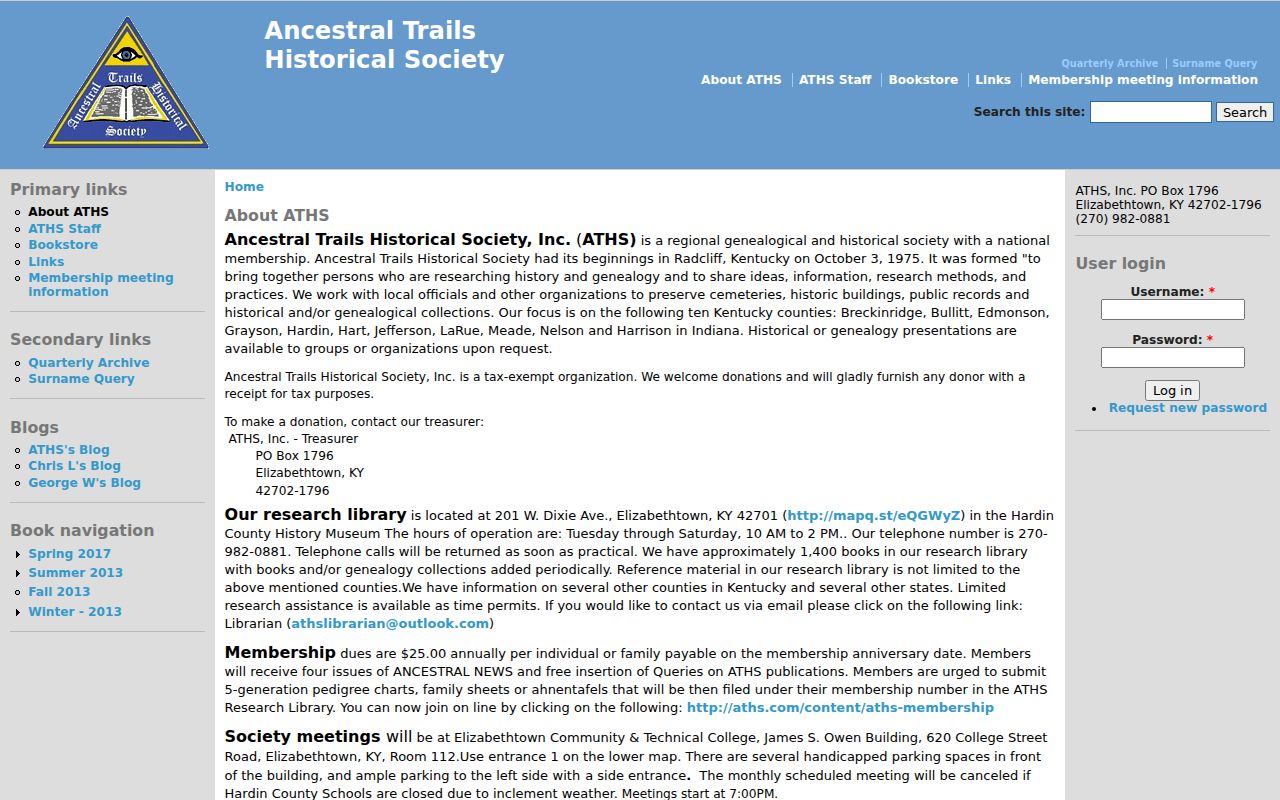
Those holdings are useful when an online deed reference ends at a book, film, family file, or unindexed local publication.
Elizabethtown Past Residents Beyond Deeds
City permits may date construction, an addition, inspection, or certificate, but the current SmartGov public reports and documents areas were empty during inspection. That does not mean no permit exists. Search the Elizabethtown SmartGov portal, then request the project address and record type from City Planning if the web view yields nothing.
When a former owner died, Hardin wills, settlement books, order books, probate papers, newspaper notices, and the next deed can identify the estate path. An heir's mailing address is only correspondence evidence. Keep it separate from proof that the heir lived in the house.
Elizabethtown Previous Residents Records Survived
The Hardin County History Museum reports that the third courthouse burned in December 1932 and that all records were saved. A new courthouse followed within 15 months. That local account matters to previous-residents research because a missing web result should not be confused with a lost courthouse record. The saved deed, order, or settlement book may still require an archive index and an in-person or staff-assisted search.
The date also makes the confirmed 1932-1933 directory reprint a useful independent check. A deed names transfer parties and the tract. A directory entry can add a dated address and occupation. When both agree, the evidence is stronger, yet neither source proves every member of a household. Record the exact volume, page, spelling, and date so another researcher can repeat the match.
Transportation history can help with older descriptions. The museum records the Louisville and Nashville Railroad's first local train in 1854, and historic plats may use the railroad, a road, or a creek as a boundary. Keep those landmarks in the notes when translating an old tract into a present parcel. Modern GIS should confirm the theory, not erase the language in the original instrument.
Confirm Elizabethtown Previous Residents
Owners are only half the account. A city directory or released census can place a named household at an Elizabethtown address, including people who did not hold title. An obituary may connect a person to relatives and a death date, while probate can explain why an estate or commissioner appears in the next conveyance. Each source answers a narrow question, so preserve its date and wording.
Sanborn map coverage for Elizabethtown was not found in the inspected Library of Congress search. Use the confirmed historic plats and ask local collection staff whether other fire-insurance or block maps exist. Do not invent a map year. The same caution applies to reverse-directory runs and street renumbering, neither of which had a full official online inventory.
Lawful use. Research previous residents for house history, genealogy, estate work, or personal curiosity. Never use an old or current address to track, intimidate, or harass a living person.